
Why Classification Changes Everything
Para Standing Tennis is played by people with physical disabilities who compete without using a wheelchair. With over 500 players from more than 45 countries across 5 continents, and the ambition to reach Grand Slams and become a Paralympic sport, the discipline is growing fast — but growth alone is not enough.
In Paralympic sport, classification is the mechanism that makes competition meaningful: it ensures that what separates athletes on the court is skill and determination, not mismatched functional capacity. And yet, classification remains one of the most complex challenges in sports science — data can only be collected through direct observation of each athlete, in competition and in the lab, making the process time-intensive and, in many disciplines, still based more on tradition than on objective evidence.
Para Standing Tennis is at a turning point. With the 2026 IPSTA World Championships coming to Turin and the ITF having signed a formal MoU with IPSTA, the sport needs a classification framework that can stand up to international Paralympic scrutiny. That is the challenge Politecnico di Torino has taken on — with the support of Intesa Sanpaolo Innovation Center through the Sport Hub ecosystem.

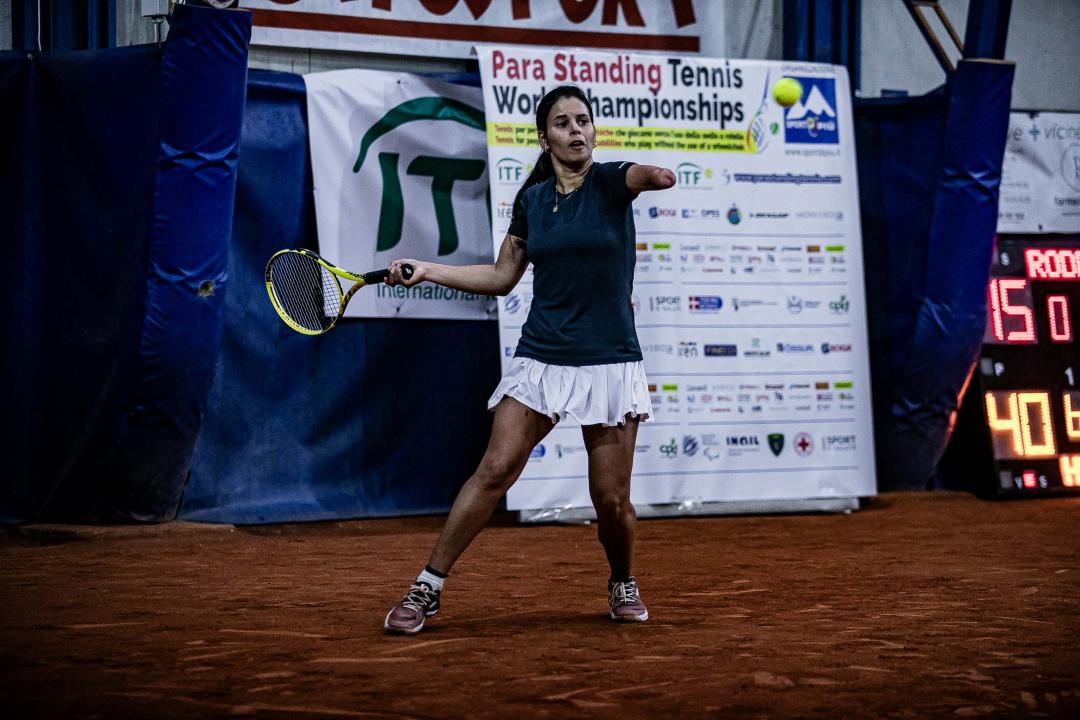
How We Are Building an Evidence-Based Classification System
The research team is developing the first evidence-based classification system for Para Standing Tennis — built on data, not assumption.
The eight-month research phase runs across seven work streams:
- Scientific Advisory Committee — expert oversight to meet international Paralympic classification standards
- Literature review — systematic mapping of existing science on impairment assessment and tennis biomechanics
- Performance determinants — identification of the physical and functional factors that shape performance across PS1, PS2, PS3 and PS4 categories
- Field data collection — direct observation and assessment of athletes during live competition
- Laboratory testing — controlled biomechanical measurements in a dedicated research environment
- Data analysis — processing of collected data to identify statistically significant classification indicators
- AI-powered modelling — machine learning applied to support and enhance traditional classification methods
The result is a replicable, transparent, and scientifically grounded framework — one that gives athletes, federations, and international bodies confidence that competition in Para Standing Tennis is genuinely fair.